 Budapest, Hungary — October 16, 1956
It is October 16, 1956.
Teri Szilágyi doesn’t like what she is hearing.
Everywhere she goes, people seem to be talking.
And they are getting louder.
Teri has three small children to worry about. Dodi is the oldest. Then Laci. And little Éva is only sixteen months old.
Politics is not what Teri wants to think about.
Getting food for her family is.
Keeping the children safe is.
But lately it seems impossible to go anywhere without hearing someone complain about the government.
At the market, people are still talking about the enormous crowd that gathered ten days ago for the reburial of László Rajk.
They are talking about Imre Nagy too. Three days ago, he was allowed back into the Communist Party.
Something is changing.
Even the college students are getting involved.
News is spreading from the universities. In Szeged, students are organizing themselves independently of the official Communist youth organization they are forced to join. They are talking about changes they want in their universities, and word is beginning to travel to students in other cities.
Young people are becoming bolder.
So are their parents.
So are the workers.
People who once lowered their voices are beginning to speak where other people can hear them.
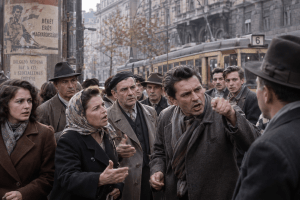
Teri hears a man complaining about the government.
Another complains about Moscow.
Then somebody says it.
“The Ruskies should leave the country.”
Teri looks at him.
Has he lost his mind?
Not long ago, people were afraid to say things like that even inside their own homes.
Now this man is saying it where strangers can hear him.
And instead of walking away, another man agrees.
Then another.
Teri doesn’t like it.
Many mothers don’t.
They have children.
They know how quickly angry words can turn into something much more dangerous.
Hungary has already lived through war.
Families remember soldiers.
They remember hunger.
They remember people disappearing.
They know what governments can do when they believe people are threatening their power.
Teri doesn’t need another war.
She needs bread.
She needs milk.
She needs her children safe in their beds at night.
But the anger is becoming harder to ignore.
That same day, in Győr, something extraordinary is happening.
At a public meeting attended by around a thousand people, Hungarians are openly criticizing the government and talking about something that would have been dangerous to discuss openly before.
Soviet troops should leave Hungary.
People are saying it out loud.
The fear that has kept so many people quiet is beginning to crack.
Teri doesn’t know about every meeting taking place around the country. She doesn’t know everything the university students are discussing.
She only knows what she can see and hear around her.
People are angry. People are talking even in her small village Gomba.
And each day they seem a little less afraid of who might be listening.
When her husband Józsi comes home, Teri tells him what she has been hearing.
“People need to stop this.”
Józsi looks at her.
“They’re tired, Teri.”
“I don’t care if they’re tired. We have three children.”
She looks toward them.
That is the difference.
To some people, these conversations are about politics.
To Teri, they are about Dodi, Laci and Éva.
She knows what can happen when governments and angry people collide.
She wants everyone to calm down.
But Hungary is not calming down.
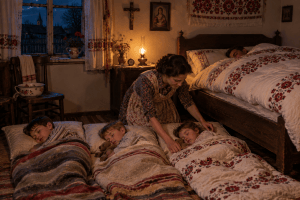
Tonight, Teri puts her children to bed.
Tomorrow she will get up and take care of them again.
Budapest will wake up.
The trams will run.
People will go to work.
Mothers will shop for food.
Students will go to their universities.
From the outside, life may still look almost normal.
But underneath it, something is changing.
Hungarians are getting angry.
And Teri is getting scared.
It is October 16, 1956.
That is all she knows.
 *
*
Seventy years later, I know what my mother could not have known that night.
I was little Éva, the sixteen-month-old child she was trying to protect.
Teri and Józsi were my parents. Ica and Dezső were my aunt and uncle.
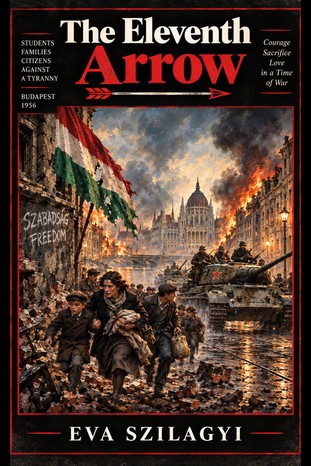
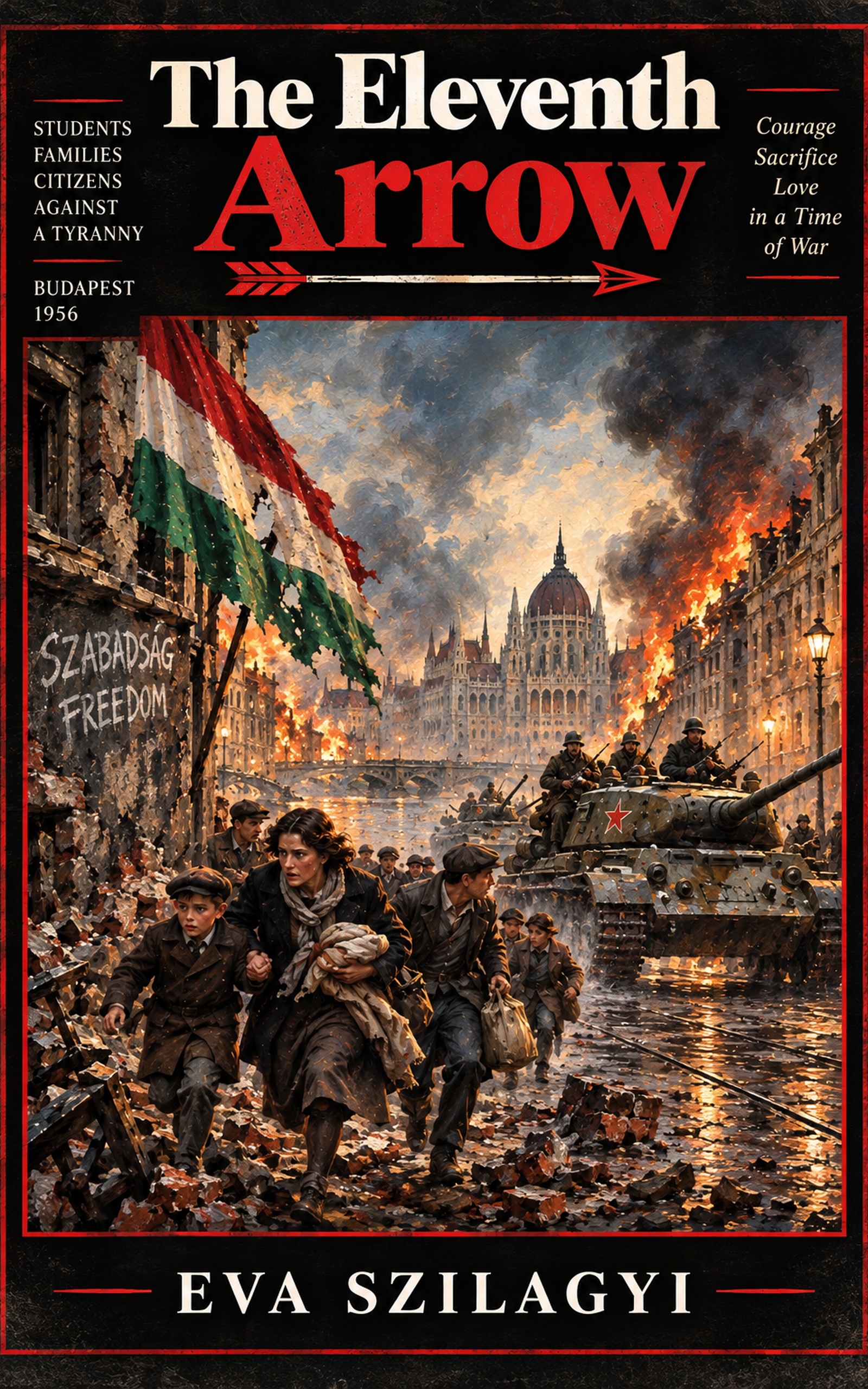
The Eleventh Arrow tells the story of my family’s life in Hungary and what happened to us during the Hungarian Revolution of 1956.
But our family’s story did not end when we left Hungary.
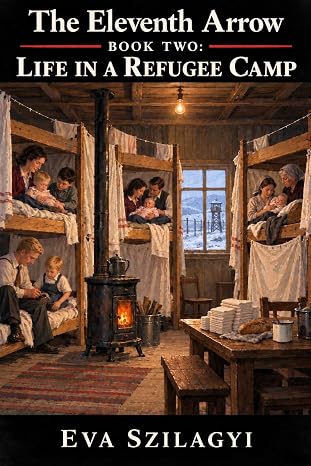
The Eleventh Arrow: Refugee Camp continues our journey afterward, when my parents still had three small children to protect and no idea where we would eventually call home.
These people are not names I discovered in a history book.
They are my family.
And seventy years later, I am still telling their story.
Éva Szilágyi
Author’s Note: This story places members of my family within documented events in Hungary in October 1956. Some scenes and dialogue have been recreated to show what everyday life may have felt like, while the historical events are based on the historical record.
The Eleventh Arrow
→ Purchase Paperback or Kindle Listen on Audible
The Eleventh Arrow: Refugee Camp
→ Purchase Paperback or Kindle Listen on Audible