 Dezső Szilágyi — Budapest, October 9, 1956
Budapest, Hungary — October 9, 1956
We are live today from Budapest.
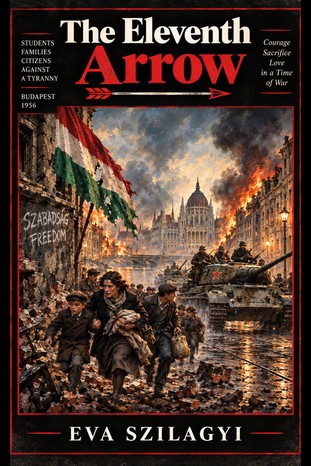
It has been three days since an enormous crowd gathered for the reburial of László Rajk.
People are still talking about it.
Not loudly.
Dezső Szilágyi is walking home when he hears two men behind him discussing the funeral.
“Did you see how many people were there?”
The other man lowers his voice.
“They say two hundred thousand.”
Dezső keeps walking.
He knows better than to turn around.
Everyone in Hungary knows who László Rajk was.
He had been one of the most powerful Communist officials in the country. Then his own government arrested him, accused him of crimes, put him through a show trial and executed him.
Now that same government has admitted that the charges against him were false.
And three days ago, they buried him again.
This time with honor.
Dezső cannot stop thinking about that.
If the government could execute one of its own leaders for crimes he did not commit, what could it do to an ordinary man?
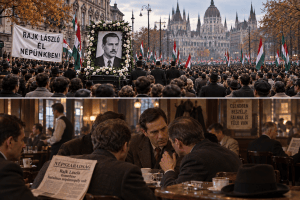
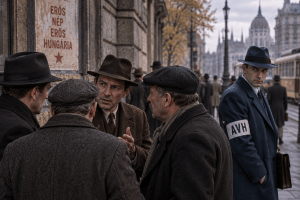
He reaches a corner where several men are standing together.
Normally Dezső would walk past.
Today he stops.
One of the men recognizes him.
“Dezső.”
He nods.
Another man is talking about the funeral.
“So now they tell us Rajk was innocent.”
Nobody answers.
The man continues.
“They killed him. Now they give him a funeral.”
A second man looks around.
“Keep your voice down.”
There it is again.
That warning.
Every Hungarian knows it.
Keep your voice down.
Dezső has heard those words all his life under the Communist government.
At work.
On the street.
Inside people’s homes.
Sometimes even around family.
But something feels different this week.
Three days ago, thousands upon thousands of Hungarians stood together in Budapest.
They saw one another.
They saw how many people were willing to come.
And now people are talking.
Dezső looks at the men around him.
“Maybe people aren’t as afraid anymore,” he says.
The conversation stops.
For just a second, Dezső wishes he could pull the words back into his mouth.
A man he doesn’t recognize is standing nearby.
Did he hear?
Who is he?
ÁVH?
An informer?
Or just another Hungarian listening to a conversation?
There is no way to know.
Dezső says goodbye and continues home.
He walks a little faster now.
When he reaches the apartment, Ica is there.
His 9 year old daughter Gabbi is home too.
Ica looks at her husband.
“What happened?”
“Nothing.”
She knows him too well.
“Dezső.”
He takes off his coat.
“I said something.”
Ica stops what she is doing.
“What did you say?”
“Nothing terrible.”
Her face changes.
There is no such thing as nothing terrible when you don’t know who is listening.
Dezső tells her about the men.
He tells her what he said.
Maybe people aren’t as afraid anymore.
Ica stares at him.
“Bolond vagy?”
Are you crazy?
Dezső almost smiles.
Maybe he is.
But he cannot forget what he saw three days ago.
A city filled with people.
People who came despite their fear.
People who stood together.
Something is changing in Budapest.
Dezső can feel it.
He just doesn’t know whether that change will make life better—or make it much more dangerous.
Tonight he sits with Ica and Gabbi inside their home.
Outside, Budapest is quiet.
Tomorrow he will go back to work.
Ica will go shopping.
Gabbi will continue with her life.
Everything will probably look exactly the same.
But Dezső knows something tonight that he didn’t know before.
He is not the only one who is tired of being afraid.
It is October 9, 1956.
 And that is all Dezső knows.
*
Seventy years later…
I know what Dezső could not have known that night.
History was moving toward my family.
Ica and Dezső were my aunt and uncle. Teri and Józsi were my parents. I was only sixteen months old when the events of 1956 changed all of our lives.
The Eleventh Arrow tells the story of my family’s life in Hungary and what happened to us during the Hungarian Revolution of 1956.
But our story did not end when we left Hungary.
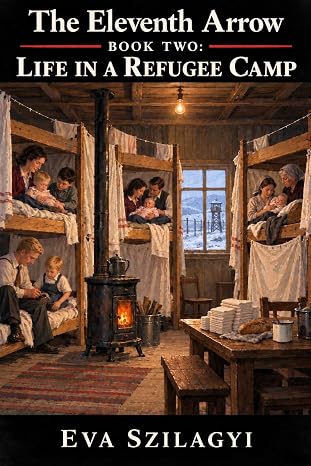
The Eleventh Arrow: Refugee Camp continues our family’s journey as refugees, when my parents still had three small children to protect and no idea where we would eventually call home.
These people are not names I discovered in a history book.
They are my family.
And seventy years later, I am still telling their story.
Éva Szilágyi
Author’s Note: This story places members of my family within documented events in Hungary in October 1956. Some scenes and dialogue have been recreated to show what everyday life may have felt like, while the historical events are based on the historical record.
The Eleventh Arrow The Eleventh Arrow: Refugee Camp
→ Purchase Paperback or Kindle ← Purchase Paperback or Kindle
→ Listen on Audible 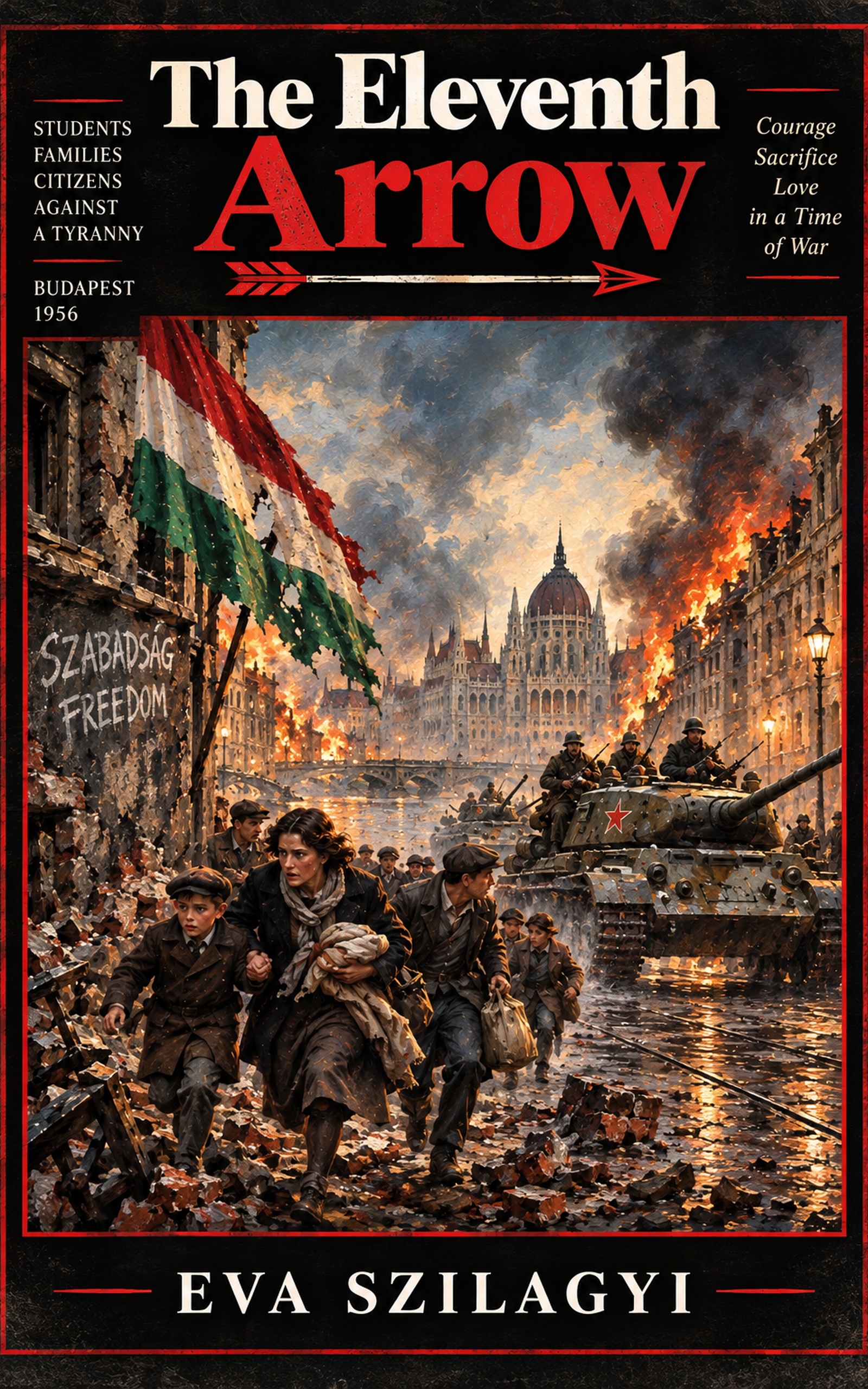
 ← Listen on Audible — Soon

