To understand why Hungarians rose up against Soviet control in 1956, we have to go back to World War II—and even further, to World War I.
Hungary had been part of the Austro-Hungarian Empire, which fought alongside Germany during World War I. Germany and Austria-Hungary were allies, and their soldiers fought on the same side.
After World War I, the Austro-Hungarian Empire was broken apart. Under the Treaty of Trianon, Hungary lost roughly two-thirds of the territory of the former Kingdom of Hungary, and millions of ethnic Hungarians suddenly found themselves living outside Hungary’s new borders.
When another war approached, Hungary and Germany were not strangers. Their countries had fought on the same side before, and Germany and Italy supported Hungary’s efforts to regain some of the territory it had lost after World War I. During the late 1930s and 1940, Hungary recovered some of those territories. Hungary became increasingly tied to Germany and formally joined the Axis alliance in November 1940.
When Germany invaded the Soviet Union in 1941, Hungary eventually entered the war against the Soviet Union. Hungarian soldiers were sent to the Eastern Front, where terrible losses were suffered on both sides.
But Hungary’s alliance with Germany did not mean Hungary wanted to remain tied to Hitler until the end. As Germany began losing the war, Hungarian leaders looked for a way out.
Hitler did not trust Hungary to remain on Germany’s side. In March 1944, German forces occupied Hungary. Later that year, Hungary’s Regent, Miklós Horthy, attempted to withdraw Hungary from the war and announced an armistice with the Soviet Union. German forces kidnapped his son and used him as leverage against Horthy. Horthy was forced from power, and a new Hungarian government continued fighting alongside Germany.
By the end of the war, Hungary was devastated.
But the departure of the Germans did not mean Hungary was free.
The Soviet Red Army entered Hungary in 1944. Soviet troops remained after the war, and Hungary suffered destruction, looting and violence during the Soviet occupation. The Soviet Union gained enormous political influence over the country.
Although Hungary held elections after the war, the Communist Party gradually eliminated its political opponents and took control. By 1949, Hungary had become the Hungarian People’s Republic, a Communist state closely controlled by Moscow.
Mátyás Rákosi became Hungary’s dominant Communist leader and one of Stalin’s most loyal followers.
Under Rákosi, Hungary went through some of its darkest postwar years. People who openly opposed communism risked imprisonment and persecution. Show trials were held against supposed enemies of the government. The feared State Protection Authority, known as the ÁVH, arrested and interrogated people suspected of opposing the regime. People whispered in their own homes for fear they might be heard. The government controlled the press and much of public life, while Soviet-style economic policies created hardship for ordinary Hungarians.
People learned to be careful about what they said—and even whom they trusted.
So did the Soviet government actually hate Hungary?
YES.
There was deep bitterness left from World War II. Hungarian soldiers had fought against the Soviet Union on the Eastern Front, and Soviet soldiers had died fighting Hungarian forces. When the Red Army entered Hungary, the Hungarian people suffered destruction, looting and violence.
But the Soviet government wanted something from Hungary even more than revenge.
Control.
Hungary was strategically important to the Soviet Union. It was part of the Soviet-controlled bloc of Eastern European countries separating the Soviet Union from Western Europe. In 1955, Hungary also became a member of the Warsaw Pact, the Soviet-led military alliance.
The Soviet government was not about to simply give Hungary back to the Hungarian people.
Hungarians had survived war, occupation, political repression and enormous hardship. They had already lost so much.
Now they wanted their country back.
Then something changed.
Joseph Stalin died in 1953. In February 1956, Soviet leader Nikita Khrushchev publicly denounced many of Stalin’s crimes and abuses. Across Eastern Europe, people began wondering whether the harsh Stalinist system might finally change.
Hungarians wanted change!
Students, workers, writers and citizens increasingly demanded greater freedom, political reform, freedom of speech and the withdrawal of Soviet troops from Hungary.
On October 23, 1956, thousands gathered in Budapest.
What began as a student demonstration grew into something much larger. Crowds gathered at Parliament. Stalin’s enormous statue in Budapest was pulled down.
Hungary was changing before their eyes.
Radio Free Europe was broadcasting into Hungary during the Revolution. My father listened to those broadcasts. He remembered hearing the Hungarians being encouraged to keep fighting and that America was coming to help.
My father believed them.
Many Hungarians believed help was coming.
America never came.
My father never forgot it.
What happened during those extraordinary weeks changed Hungary forever. It also changed the lives of my parents and their three small children.
That is where this history becomes my family’s story.
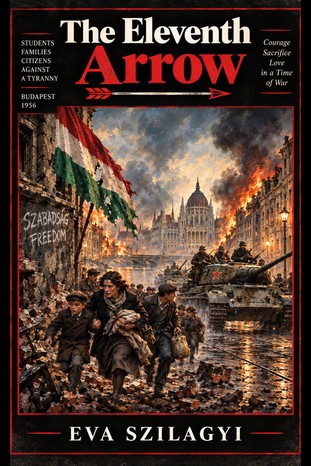
The Eleventh Arrow, the first book I wrote about my family’s journey, tells the story of our lives in Hungary and what happened to our family during the Hungarian Revolution of 1956.
But when the Revolution ended, our family’s story did not.
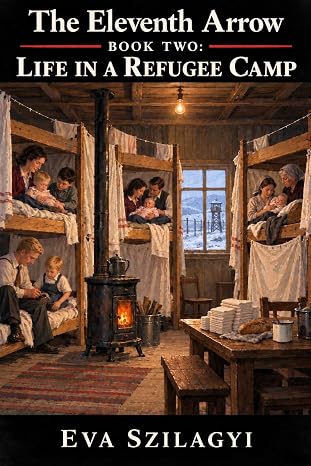
The Eleventh Arrow: Refugee Camp, which I recently published, continues the journey. My parents had survived the Revolution, but they still had three small children to protect and no idea what the future held.
Together, the two books tell one continuous family story—what happened to us during the Hungarian Revolution and what happened afterward.
Seventy years later, the Hungarian Revolution of 1956 is about much more than Soviet tanks, Communist governments and political leaders. Behind that history were real families whose lives were changed forever.
My family was one of them.
And seventy years later, I am still telling their story.
Éva Szilagyi
Author’s Note: This article combines documented historical events with the memories and experiences passed down through my Hungarian family.
The Eleventh Arrow The Eleventh Arrow: Refugee Camp
→ Purchase Paperback or Kindle ← Purchase Paperback or Kindle
→ Listen on Audible 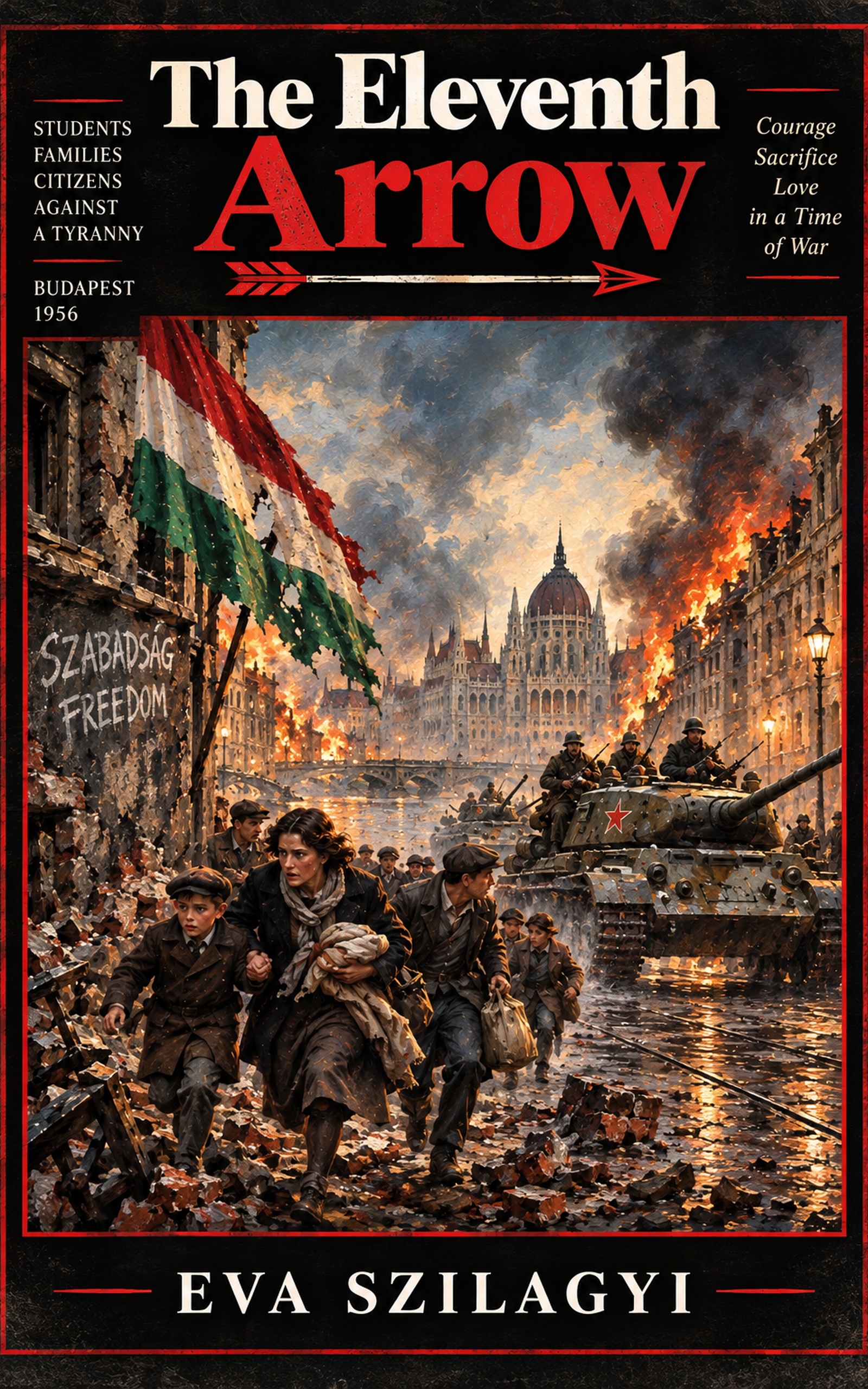
 ← Listen on Audible — Soon

