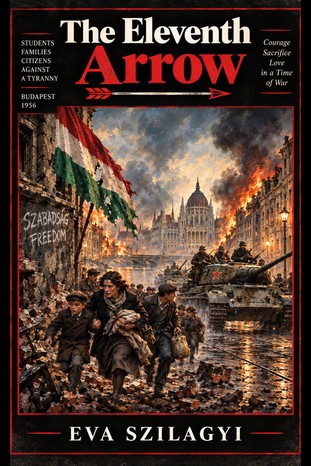
 When people think about the Hungarian Revolution of 1956, they often picture Soviet tanks in the streets of Budapest, young freedom fighters and buildings damaged by war.
But revolutions do not begin in one day.
Before October 23, 1956, Hungarian families had already spent years living under a Communist government controlled by Moscow. To understand why people were finally willing to risk their lives for freedom, you have to understand what everyday life had become.
After World War II, Hungary fell under Soviet influence. By 1949, the Hungarian People’s Republic had been established, and Mátyás Rákosi became the country’s dominant Communist leader and one of Stalin’s most loyal followers.
The government controlled much more than politics.
It controlled newspapers and radio. Information coming into and leaving Communist-controlled Eastern Europe was severely restricted. People could not simply assume they were free to say whatever they thought about their government.
And people were afraid.
Hungary’s State Protection Authority, the ÁVH, became one of the most feared institutions in the country. People suspected of opposing the Communist government could face interrogation, imprisonment and persecution.
That kind of fear does something to everyday life.
People learned to watch what they said.
They learned not to trust everyone around them.
Even conversations inside your own home could feel dangerous.
Life was also difficult economically. The government pushed Soviet-style economic policies that emphasized heavy industry, while ordinary Hungarians dealt with shortages and rising prices. Farmers faced government pressure and attempts to force agriculture into collective farms.
People still went to work. Children still went to school. Mothers still cooked dinner. Families celebrated birthdays and weddings.
Life continued.
But freedom had changed.
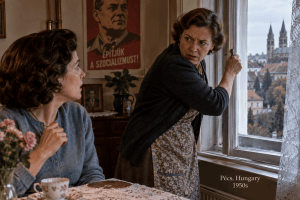 Years later, after my family had escaped Hungary and was living in the United States, my mother returned to Hungary to visit her sister, Erzsi, in Pécs.
By then my mother had become accustomed to living in America.
She had become accustomed to freedom of speech.
For a moment, she forgot where she was.
My mother began openly talking about how terrible Communism was.
Erzsi immediately got up and closed the windows.
“Bolond vagy?”
Are you crazy?
What is wrong with you? Are you trying to get us killed?
My mother suddenly remembered.
She wasn’t in America.
Erzsi was a hairstylist. She knew many people, heard what was happening around her and understood the danger of saying the wrong thing where someone might hear.
Think about that for a moment.
My mother had escaped Hungary, lived in America and become so accustomed to speaking freely that she had forgotten what it felt like to be afraid of an open window.
Her sister had not forgotten.
That story stayed in our family because it shows something that dates and political speeches cannot.
It shows what losing freedom looked like inside an ordinary home.
By 1956, Hungarians had lived through war, German occupation, Soviet occupation, political repression, censorship, economic hardship and years of fear.
Something was building beneath the surface.
People wanted to speak freely.
They wanted political change.
They wanted Soviet troops out of their country.
Most of all, they wanted Hungary to belong to Hungarians again.
On October 23, 1956, that desire for freedom finally came into the streets.
What happened next became the Hungarian Revolution of 1956.
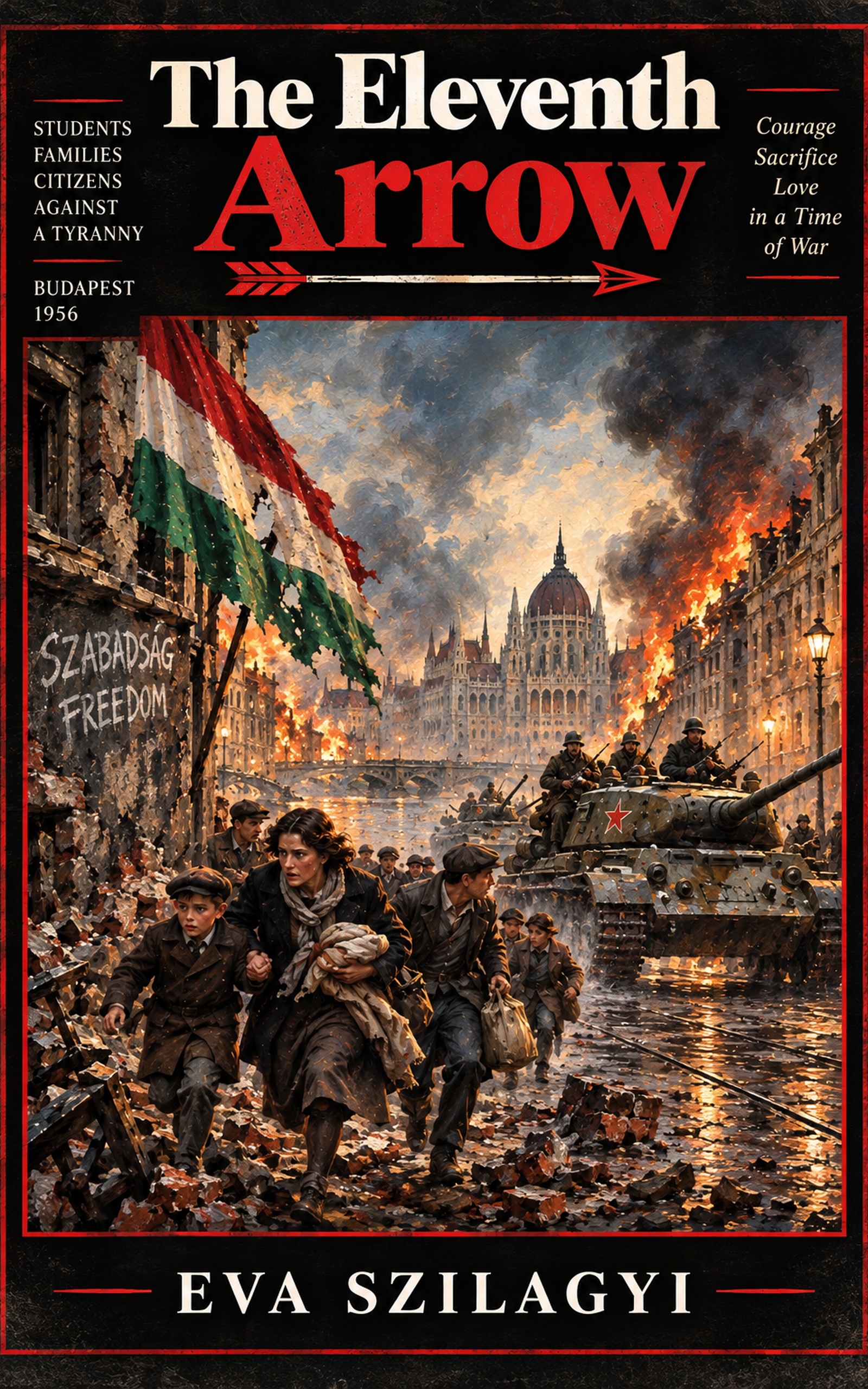
The Eleventh Arrow tells the story of my family’s life in Hungary and what happened to us during the Revolution.
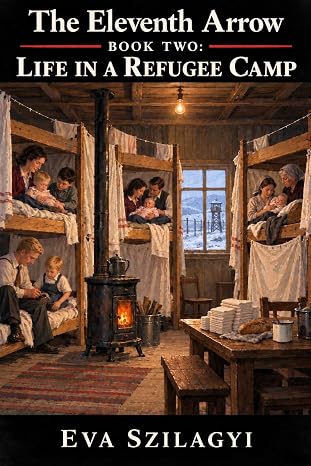
The Eleventh Arrow: Refugee Camp continues our family’s journey afterward, when my parents still had three small children to protect and had to find a way to build a future outside the country they had called home.
Seventy years later, it is easy to look at old photographs and think of 1956 simply as history.
For my family, it wasn’t history.
It was their life.
And seventy years later, I am still telling their story.
Éva Szilagyi
Author’s Note: This article combines documented historical events with the memories and experiences passed down through my Hungarian family.
The Eleventh Arrow The Eleventh Arrow: Refugee Camp
→ Purchase Paperback or Kindle ← Purchase Paperback or Kindle
→ Listen on Audible ← Listen on Audible — Soon
The Eleventh Arrow
→ Purchase Paperback or Kindle Listen on Audible
The Eleventh Arrow: Refugee Camp
→ Purchase Paperback or Kindle Listen on Audible