 Escaping Hungary during the 1956 Hungarian Revolution was only the beginning of my family’s journey.
My parents, Teri and Jozsi, fled Hungary with their three small children, searching for something most of us take for granted: freedom. Crossing the border meant they were finally beyond the immediate reach of the Soviet forces, but it did not mean they had found a new home.
Instead, they entered another uncertain chapter of their lives—a Yugoslav refugee camp.
Behind the gates of the camp, families who had already risked everything to escape Hungary now had to wait. They did not know which country, if any, would eventually accept them. They did not know how long they would remain there or what their lives would look like when they finally left.
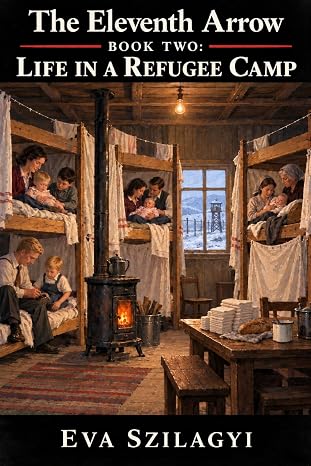
Privacy was almost nonexistent. Families shared crowded living quarters, sleeping in stacked bunks and hanging sheets to create small private spaces. Food and supplies were limited. Letters offered one of the few connections to relatives outside the camp.
For my parents, the hardest part may have been the uncertainty.
They had three young children depending on them. They had left their home, their possessions, and the life they knew behind. Now they had to somehow create a future while living in a place where nearly every important decision about that future was beyond their control.
But my father, Jozsi, was never very good at simply sitting around waiting.
Life inside the refugee camp became a story of ingenuity, risk, unexpected humor, difficult choices, friendships, and heartbreaking goodbyes. Even in circumstances that could easily have destroyed hope, ordinary life continued. Parents cared for children. Families helped one another. People found ways to survive.
And they waited for the answer that could change everything:
Where would they go next?
Australia was one possibility. America was another. But wanting a new home and actually being accepted into one were very different things.
My family would spend two winters in the refugee camp before eventually arriving in the United States in 1958.
I grew up knowing pieces of this story because these were my parents and this was my family. Now I am sharing what happened after their escape—the part of a refugee’s journey that is sometimes forgotten.
Crossing a border can save your life.
But crossing a border does not necessarily mean you are free.
The Eleventh Arrow — Book Two: Life in a Refugee Camp continues the true story of Teri, Jozsi, and their children as they struggle toward the new life they risked everything to find.
Read The Eleventh Arrow — Book Two: Life in a Refugee Camp on Amazon →

